Turbo Typing
Research Assistant, University of Leeds (2022–2024) · Project page at CAER
The project
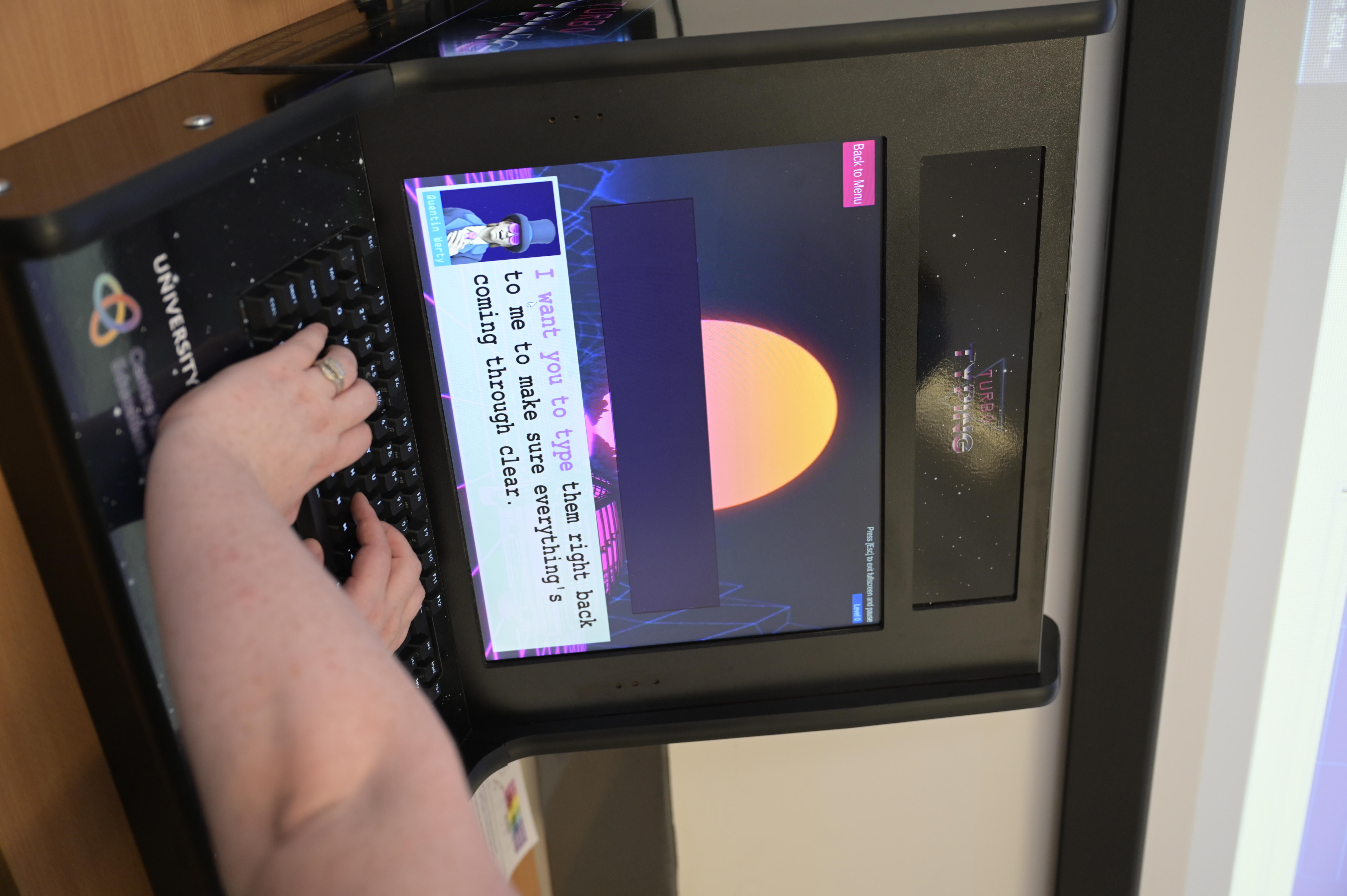
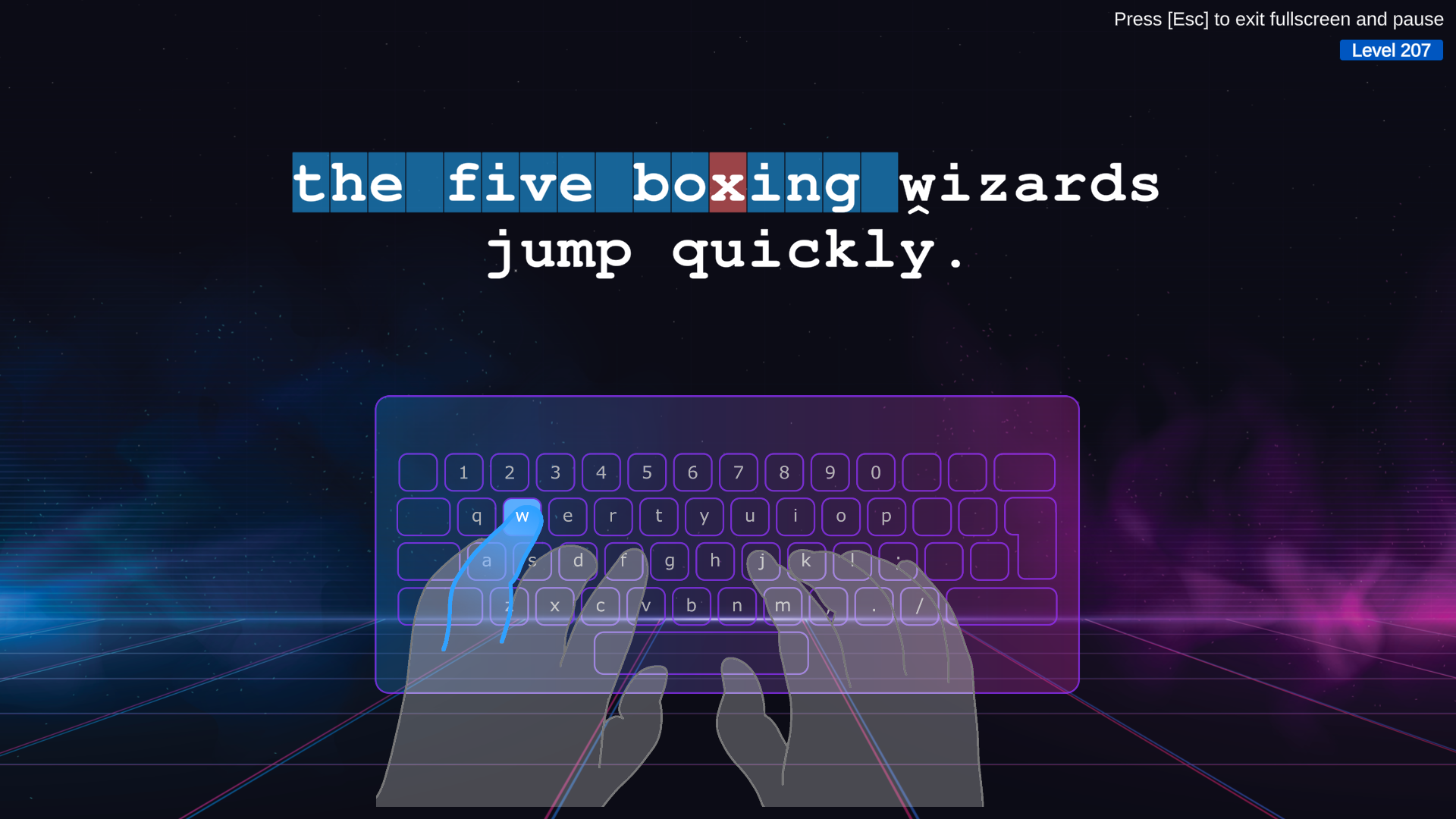
Turbo Typing was a five-year research project run through the Centre for Applied Education Research (CAER) at the University of Leeds and funded by the Leverhulme Trust. It delivered a bespoke online touch-typing course to primary school children (aged 9-10) over six months, while recording fine-grained measures of typing ability and its component sub-skills, such as manual dexterity and error monitoring. The aim was to map how these sub-skills developed and how much each contributed to overall performance at each stage of learning. Alongside its theoretical aims, the project assessed the feasibility of studying sensorimotor learning at scale in naturalistic educational settings.
My role
I joined the project as a research assistant, working closely with the lead researcher (Emily Williams). I started out making targeted edits to existing Unity tasks and was soon given full ownership of creating new ones. I designed and built complete experimental tasks from start to finish, turning psychological theory into Unity logic and delivering fully tested builds ready for data collection.
The role primarily involved:
- Task Design — Coded theory-driven task behaviour and implemented reliable, accurately timed keystroke-level logging for later analysis.
- Stakeholder management — balanced what researchers, teachers and the children themselves needed, and explained constraints and trade-offs to people without a technical background
- Co-design — supported co-design sessions with stakeholders, and turned their feedback into concrete changes to the course
Problems solved
- Engaging onboarding — Built an introductory cut scene to help the children understand and engage with the course
- Engaging tasks — Translated psychological tasks into mini-games that children found fun, without compromising what each task was meant to measure
- UI design — Redesigned the visual elements of each task to keep children focussed and informed throughout the course
- Accessibility — Added text-to-speech, so that reading ability didn’t impede progress